

By the Active Baby team, North Vancouver & Langley, BC · Updated October 2026 · Safety facts checked against Transport Canada
The short answer: in Canada, your child moves through four car seat stages: rear-facing (from birth, for as long as the seat allows), forward-facing with a harness (once they've outgrown rear-facing and weigh at least 10 kg / 22 lb), a booster seat (once they've outgrown the harness and weigh at least 18 kg / 40 lb), and finally the seat belt alone. Move up only when your child outgrows their current seat's height or weight limit, never just because of a birthday.
This guide walks you through which car seat your child needs at every age, the types of car seats (infant, convertible, all-in-one, rotating and booster), BC's rules, how to install a seat safely, and the seats Canadian parents choose most at our stores.
In this guide
- Car seat stages at a glance
- Which car seat for which age?
- Types of car seats explained
- Infant seat or convertible from birth?
- Car seat rules in Canada and BC
- What to look for when buying
- How to install a car seat safely
- When to replace a car seat
- Our picks by stage
- Car seat FAQs
Car seat stages at a glance
| Stage | Seat type | Who it's for | Typical age* |
|---|---|---|---|
| 1. Rear-facing | Infant seat, convertible or all-in-one | Newborns, babies and toddlers, until they reach the seat's rear-facing height or weight limit | Birth to about 2–4 years |
| 2. Forward-facing (harness) | Convertible, all-in-one or harness-to-booster | Children who have outgrown rear-facing and weigh at least 10 kg (22 lb) | About 2–4 years until the harness is outgrown |
| 3. Booster seat | High-back or backless booster | Children who have outgrown the harness and weigh at least 18 kg (40 lb) | Usually from about 4–5 years; in BC, until at least 9 years or 145 cm (4'9") |
| 4. Seat belt | Vehicle seat belt | Children the seat belt fits properly (see the 5-step fit check below) | Usually 9–12 years |
*Ages are a rough guide only. Your child's height and weight, and your seat's limits, decide when to move up. Children under 13 are safest in the back seat.
Which car seat for which age?
Parents often search by age, so here's the quick version. Always check your seat's label and manual for its exact limits.
Car seat for a newborn (0–12 months)
Newborns ride rear-facing, in either an infant car seat or a convertible seat that fits newborns. An infant seat is the most popular first seat: it's light, carries baby in and out of the car, and clicks into a compatible stroller. Make sure the recline is set for a newborn so baby's head doesn't fall forward, and the harness straps sit at or just below the shoulders.
Car seat for a 1-year-old
Keep your 1-year-old rear-facing. Many babies outgrow their infant seat between 9 and 18 months, usually by height (the top of the head gets within about 2.5 cm / 1 inch of the shell). That's the time to move to a convertible car seat, still installed rear-facing. Bent legs touching the vehicle seat are fine and are not a reason to turn forward.
Car seat for a 2- or 3-year-old (toddler)
Most toddlers can stay rear-facing in a convertible seat until about 2 to 4 years old. Transport Canada recommends rear-facing for as long as possible, because it best protects the head, neck and spine. Turn forward only once your child has reached the seat's rear-facing height or weight limit and weighs at least 10 kg (22 lb).
Car seat for a 4- or 5-year-old
Most preschoolers ride forward-facing in a 5-point harness, using a convertible, all-in-one or harness-to-booster seat. Always attach the top tether. Keep the harness until your child outgrows its height or weight limit; many kids aren't mature enough to sit properly in a booster until about 5.
Car seat for a 6-, 7- or 8-year-old
School-age children usually ride in a booster seat once they've outgrown the harness and weigh at least 18 kg (40 lb). A high-back booster gives head and side support and helps position the shoulder belt, which is especially helpful in cars without headrests or for kids who fall asleep in the car. In BC, children must use a booster until they're 9 years old or 145 cm (4'9") tall.
Car seat for a 9- to 12-year-old
Many kids are ready for the seat belt alone between 9 and 12. Use the 5-step fit check: (1) back flat against the vehicle seat, (2) knees bend at the edge of the seat, (3) lap belt low on the hips, not the tummy, (4) shoulder belt across the middle of the shoulder and chest, not the neck, and (5) they can sit like this for the whole trip. If any answer is no, keep using the booster. Keep children under 13 in the back seat.
Types of car seats explained
Infant car seat (rear-facing only)

A lightweight, rear-facing seat with a carry handle that clicks in and out of a base installed in your car. Most also click onto a compatible stroller to make a travel system, so you can move a sleeping baby without unbuckling. Some, like the Clek Liingo and Nuna Pipa Urbn, install without a base, which is handy for taxis and travel.
Best for: newborns and families who want the convenience of carrying baby and using a travel system. Keep in mind: babies outgrow it within about the first year or so, so you'll buy a convertible seat next.
Convertible car seat (rear-facing, then forward-facing)

A convertible car seat installs rear-facing for babies and toddlers, then turns forward-facing with a 5-point harness as your child grows. Many fit newborns, and higher rear-facing limits let your child ride rear-facing for longer. It stays installed in the car.
Best for: the step after an infant seat, or families who want one seat from birth through the preschool years. Keep in mind: it's heavier and isn't meant to be carried or clicked into a stroller.
All-in-one car seat (3-in-1 or 4-in-1)

An all-in-one seat goes from rear-facing to forward-facing to a belt-positioning booster, so one seat can cover many years. Examples include the Britax One4Life, Maxi-Cosi Pria and Maxi-Cosi Kani 4-in-1.
Best for: families who want one car seat for all stages. Keep in mind: check the expiry date, since a seat you use for 10 years needs a long useful life. Some kids still need a separate, smaller booster later for a better fit.
Rotating (360°) car seat

A rotating car seat swivels toward the car door so you can lift your child in and out without twisting your back, then locks into the rear- or forward-facing position for driving. The Maxi-Cosi Andi 360 is a rotating all-in-one seat.
Best for: parents recovering from a C-section, smaller cars, and anyone tired of buckling toddlers at an awkward angle. Keep in mind: rotating seats are usually larger and heavier, so check the fit in your car.
Harness-to-booster seat (2-in-1 combination seat)

A forward-facing seat with a 5-point harness that later becomes a high-back booster. It's a good next seat for a child who has outgrown rear-facing in their convertible. Examples are the Chicco MyFit and Britax Grow With You.
Best for: preschoolers moving to forward-facing who'll use the same seat as a booster later. Keep in mind: it's forward-facing only, so it isn't for babies or young toddlers.
High-back booster seat

A booster raises your child so the adult seat belt fits properly over the hips and shoulder. The high back adds head and side support and a belt guide to keep the shoulder belt in the right place. Some, like the Clek Oobr, Nuna Aace and UPPAbaby Alta V2, can also be secured with the universal anchorage system so the booster stays put when it's empty.
Best for: children 18 kg (40 lb) and up who've outgrown their harness. Keep in mind: always use both the lap and shoulder belt; never use a booster with a lap-only belt.
Backless booster seat

A compact booster cushion for older children who sit well and whose shoulder belt already fits correctly. It's light and easy to move between cars or for carpools.
Best for: older kids, travel and second cars. Keep in mind: only use it in a seat with a headrest that reaches at least the top of your child's ears.
Infant seat or convertible from birth?
| Infant car seat | Convertible from birth | |
|---|---|---|
| Carry baby in the seat | Yes | No |
| Clicks into a stroller | Yes, with the right adapter | No |
| How long it lasts | About the first year | Several years |
| Rear-facing for longer | Limited by its smaller size | Yes, usually higher limits |
| Best for | Convenience, travel systems, winter trips | Value, one seat that stays in the car |
Many Canadian families pair an infant seat for the newborn months with a convertible seat afterwards. If you're also choosing a stroller, check that the infant seat is compatible. Our team can show you which car seat adapters fit your stroller.
Car seat rules in Canada and BC
- National Safety Mark: every car seat used in Canada must carry Transport Canada's National Safety Mark. It's illegal to import, sell or use a child car seat without one, so don't buy a seat from the US or abroad for use here. Every car seat we sell carries the mark.
- Forward-facing: Transport Canada says children who have outgrown their rear-facing seat and weigh at least 10 kg (22 lb) may ride forward-facing. Always use the top tether.
- Booster seats: for children who have outgrown their forward-facing seat and weigh at least 18 kg (40 lb).
- BC rules: in BC, all children under 16 must be properly restrained. Babies must ride rear-facing until at least 1 year old and 9 kg (20 lb), and children must use a booster seat until their 9th birthday or until they're 145 cm (4'9") tall. These are the legal minimums; safety experts recommend staying in each stage for as long as the seat allows. Other provinces have their own rules.
- Front seat: most provinces allow children 13 and older in the front seat. Children under 13 are safest in the back, and a rear-facing seat must never go in front of an active airbag.
What to look for when buying a car seat
- Fit for your child: check the height and weight limits for each mode, especially the rear-facing limits.
- Fit for your car: measure your back seat, especially in a small car or if you need three seats across. Slim seats like the Britax One4Life Slim and Clek Foonf and Fllo are popular for three-across.
- Easy, correct installation: look for features such as built-in belt lock-offs (like Britax ClickTight), recline indicators, and load legs or anti-rebound bars.
- Stroller compatibility: for infant seats, check which strollers it clicks into and whether you need adapters.
- Everyday comfort: washable covers, breathable fabrics, a no-rethread harness that adjusts as your child grows, and enough recline for naps.
- Materials: some brands offer flame-retardant-free fabrics, such as Clek's merino wool options.
- Expiry date: check how many years the seat can be used, so you know how long it will last.
How to install a car seat safely
A correctly installed seat matters as much as the seat you choose. Always follow both your car seat manual and your vehicle owner's manual.
- Choose UAS or the seat belt. Install with either the universal anchorage system (UAS, the lower anchors) or the vehicle seat belt, as your manual directs.
- Check it's tight. Hold the seat at the belt path. It should not move more than 2.5 cm (1 inch) side to side or front to back.
- Use the top tether on every forward-facing seat.
- Set the recline for rear-facing seats using the seat's indicator, so a newborn's airway stays open.
- Position the harness: straps at or just below the shoulders for rear-facing, at or just above for forward-facing. The chest clip sits at armpit level.
- Tighten the harness: you shouldn't be able to pinch any slack in the strap at the shoulder.
- Skip bulky coats: puffy snowsuits make the harness too loose. Dress your child in thin layers and add a blanket or coat over the harness. Read our winter car seat safety guide.
- Avoid extras that didn't come with the seat, such as aftermarket inserts, strap covers or mirrors, unless your seat's manufacturer approves them.
Not sure you've got it right? Visit our North Vancouver or Langley store and our team will walk you through how your seat works.
When to replace a car seat
- After a collision: Transport Canada advises replacing a seat that was in a vehicle during a crash, even if it was empty or not directly hit. Check your manufacturer's guidance.
- When it expires: nearly all Canadian car seats have an expiry or useful-life date on a label and in the manual.
- If it's damaged: a cracked shell, missing parts, or a frayed or torn harness means it's time for a new seat.
- Second-hand seats: Transport Canada doesn't recommend used seats. If you must use one, make sure you know its full history, it has the National Safety Mark, it isn't expired or recalled, and it has all its parts and its manual.
- Register your seat with the manufacturer so you're told about any recalls.
Our picks by stage
These are the seats parents ask about most at our stores. Every family, child and car is different, so come see them in person.
| Stage | Seats to compare | Why parents like them |
|---|---|---|
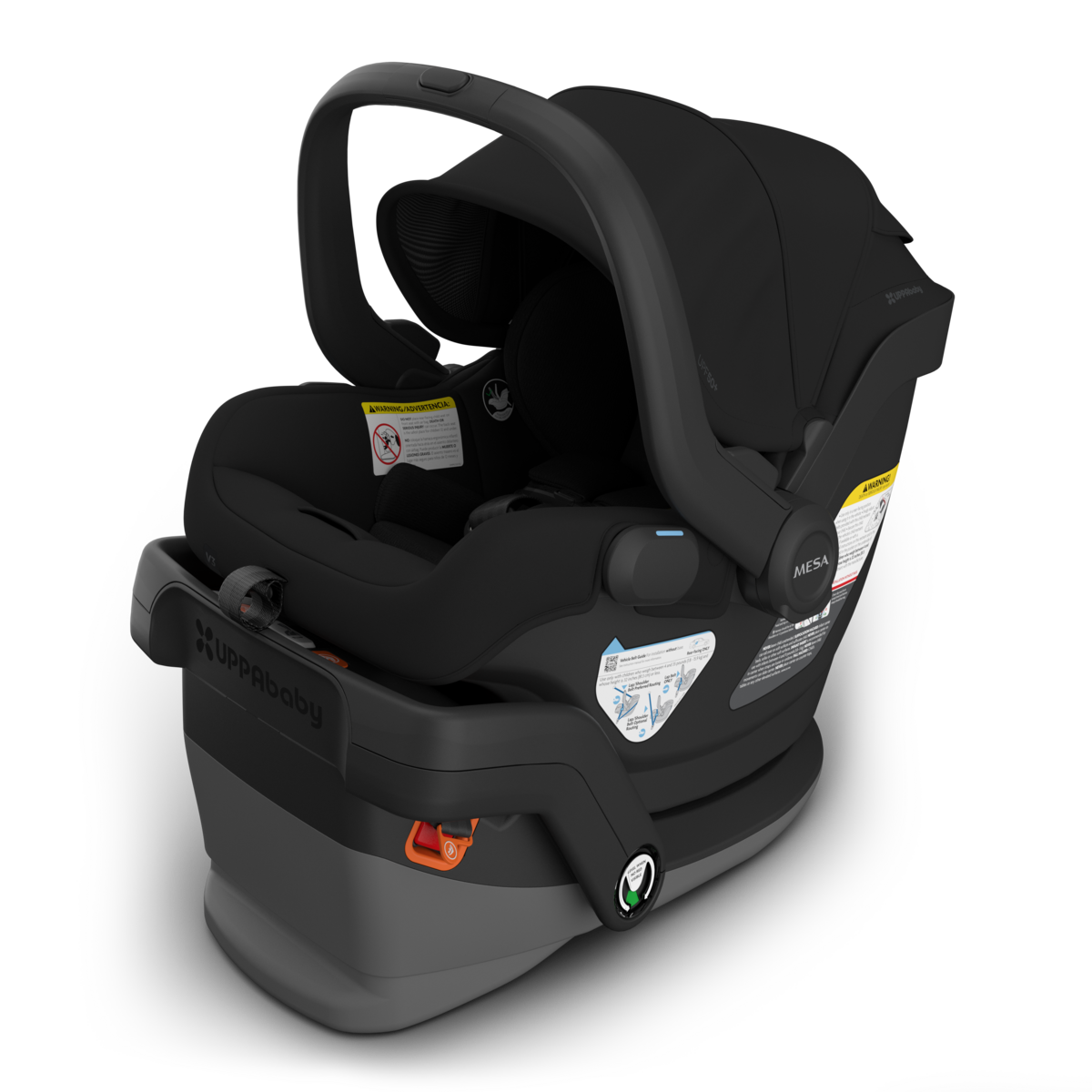
| Infant seats | UPPAbaby Mesa V3, Nuna Pipa, Clek Liing, Chicco KeyFit 35 | Click into popular strollers; Clek Liingo and Nuna Pipa Urbn install without a base |
| Convertible seats | UPPAbaby Rove, Nuna RAVA, Clek Foonf, Clek Fllo, Britax Poplar S | Long rear-facing use; slim Clek and Britax models for three-across |
| All-in-one and rotating | Britax One4Life, One4Life Slim, Maxi-Cosi Pria, Maxi-Cosi Andi 360 | One seat for many years; Andi swivels toward the door |
| Harness-to-booster | Chicco MyFit, Britax Grow With You | Harness now, booster later |
| Booster seats | Clek Oobr, Nuna Aace, UPPAbaby Alta V2, Clek Olli (backless) | High-back support and belt guides; Olli is compact for travel |
Finishing your setup? Browse car seat accessories such as bases, rain covers and travel bags. Comparing UPPAbaby infant seats? See our best infant car seats guide and best convertible car seats guide.
Get help choosing a car seat in store
Choosing a car seat is easier in person. Visit Active Baby in North Vancouver (Lonsdale) or Langley and our team will show you how different seats work, help you compare models side by side, and help you find one that fits your child, your car and your stroller. Shopping online? We offer free shipping across Canada on orders over $89.99, and you can pick up online orders from our Surrey warehouse.
Car seat FAQs
When can my baby face forward in Canada?
Only once they've outgrown the rear-facing height or weight limit of their seat and weigh at least 10 kg (22 lb). In BC the legal minimum for rear-facing is 1 year and 9 kg (20 lb), but Transport Canada recommends staying rear-facing as long as possible, often until 2 to 4 years.
When does my child need a booster seat?
When they've outgrown their forward-facing harness seat and weigh at least 18 kg (40 lb). In BC, children must ride in a booster until they're 9 years old or 145 cm (4'9") tall.
What age can a child stop using a booster seat?
When the adult seat belt fits properly, usually between 9 and 12 years. In BC that's no earlier than age 9 or 145 cm. Use the 5-step fit check in this guide.
How long can a baby stay in an infant car seat?
Until they reach the seat's height or weight limit, often between 9 and 18 months. Height usually runs out first: move up when the top of your baby's head is within about 2.5 cm (1 inch) of the top of the shell, or as your manual directs.
Can I use a convertible car seat for a newborn?
Yes, if the seat's minimum weight and height fit your baby and it's installed rear-facing with the right recline. Many parents still choose an infant seat first for carrying and stroller use.
What is the safest car seat?
Every car seat sold in Canada meets the same Canadian safety standards. The safest seat is the one that fits your child, fits your car, and that you can install and use correctly on every trip.
Do car seats expire?
Yes. Nearly all car seats sold in Canada have an expiry or useful-life date on a label and in the manual. Don't use a seat past that date.
Can I buy a car seat in the US and use it in Canada?
No. Car seats used in Canada must have the National Safety Mark, and seats sold in the US don't meet Canadian regulations.
Can my child wear a winter coat in a car seat?
Not a bulky one. Puffy coats and snowsuits leave the harness too loose in a crash. Use thin layers and put a blanket or coat over the buckled harness.
Should I replace my car seat after an accident?
Transport Canada advises replacing a car seat that was in a vehicle during a crash, even if it was empty. Check your manufacturer's instructions as well.
Sources
- Transport Canada: Choosing a child car seat or booster seat
- Transport Canada: Installing a child car seat or booster seat
- Transport Canada: Expiry dates for child car seats
- ICBC: Child car seats
- HealthLink BC: Child car seats
This guide is general information. Always follow your car seat and vehicle manuals and your province's laws.


