

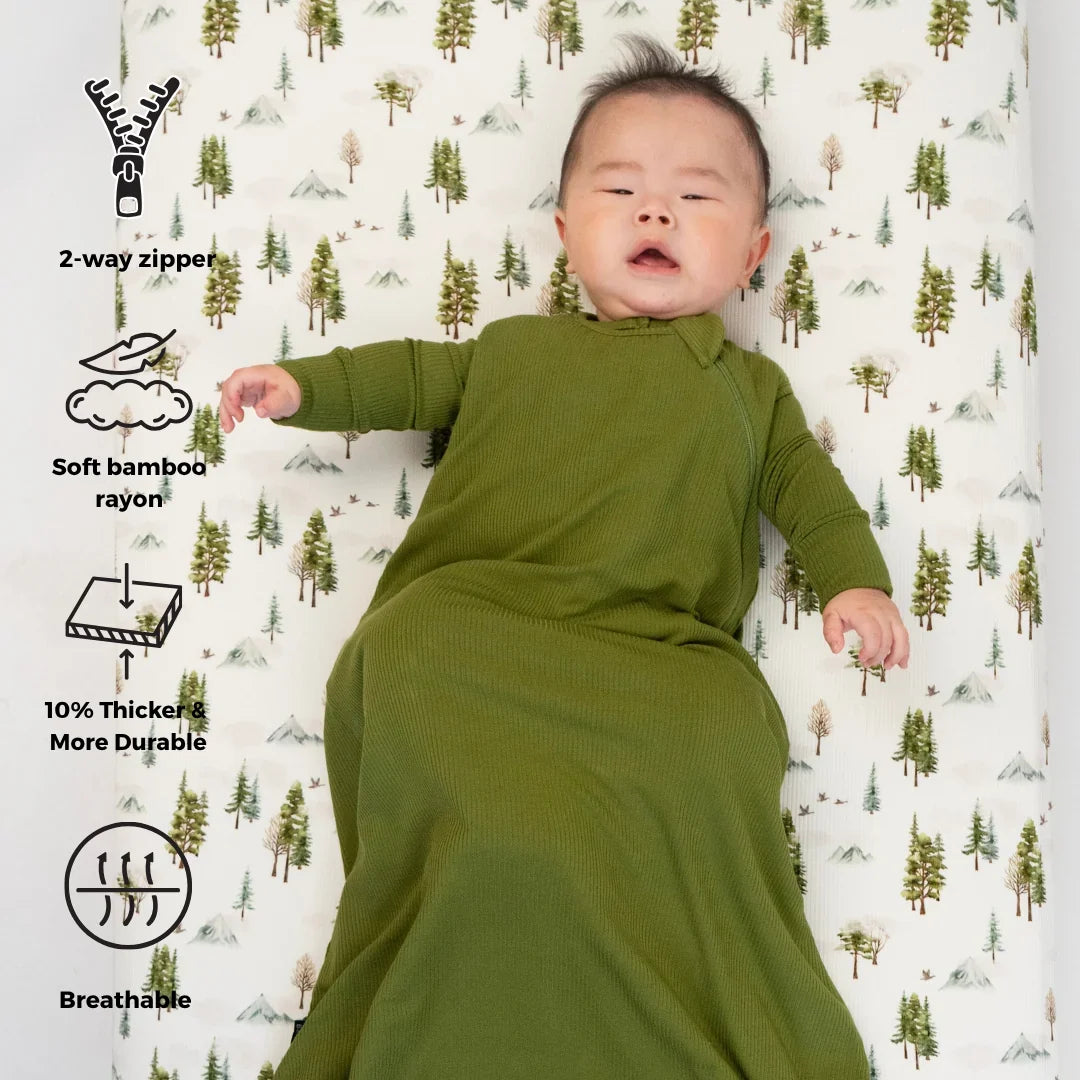
The right winter sleep sack depends on how warm your baby's room is at night, not the weather outside. Belan.J recommends its 2.5 TOG sleep sack for rooms around 16–20°C and its 1.0 TOG for rooms around 21–23°C, which covers most Canadian homes in winter.
Canadian winters can be chilly, but choosing a sleep sack isn't just about the temperature outdoors. Whether your baby sleeps in a cozy Vancouver condo or a cooler family home, understanding TOG ratings helps you keep them comfortable without overheating.
In this guide, we compare 0.5, 1.0 and 2.5 TOG sleep sacks, explain what your baby can wear underneath, and share safe sleep tips for Canadian families.
Quick Comparison: 0.5 vs 1.0 vs 2.5 TOG
The quick answer
| TOG rating | Room temperature (Belan.J guide) | Typical winter use |
|---|---|---|
| 2.5 TOG | 16–20°C | Homes where the heat goes down at night |
| 1.0 TOG | 21–23°C | Homes that stay warm overnight |
| 0.5 TOG | 23–26°C | Warm condos and well-heated rooms |
These ranges are Belan.J's own guide for its sleep sacks, not a medical rule. Other brands may differ, so always follow the manufacturer's instructions for the sleep sack you use.
What Does TOG Mean?
TOG stands for Thermal Overall Grade. It measures how warm a fabric is: the higher the number, the warmer the sleep sack.
TOG describes the sleep sack alone. What your baby wears underneath adds warmth too, so the sack and the layer under it work together. For the year-round basics, see our earlier guide on how to pick the right TOG of sleep sack. This post focuses on winter.
Baby Sleep Sack Temperature Guide: Choosing by Room Temperature
The number that matters is your baby's room in the middle of the night. Many families turn the heat down at bedtime, and older houses or basement suites can feel cool and damp. Many condos, on the other hand, stay warm all winter.
Our top tip: put a simple room thermometer near (not inside) the crib and check it at bedtime and overnight. A few nights of readings will tell you more than any forecast.
The Public Health Agency of Canada's rule of thumb is to keep your baby warm, not hot: if the room is comfortable for you, it's comfortable for your baby too.
 Belan.J 2.5 TOG Sleep Sack$69.99Best for cooler winter nights
 Belan.J 1.0 TOG Sleep Sack$75.99Best for warm homes and year-round use
 Belan.J 0.5 TOG Sleep Sack$65.99Best for warm condos
2.5 TOG sleep sack: for cooler rooms
Best for rooms around 16–20°C, common in homes where the thermostat drops at night.
The 2.5 TOG sleep sack has a padded layer that keeps your baby comfortable without loose blankets in the crib. Many West Coast families use one from about November to March.
1.0 vs 2.5 TOG: which is right for winter?
Best for rooms around 21–23°C, and for families who want one sleep sack for most of the year.
If your home stays warm overnight, a 1.0 TOG sleep sack is often all you need, even in winter. If your room sits below about 20°C most nights, the 2.5 TOG is the simpler choice. Having one of each makes it easy to adjust for a cold snap or a mild, rainy week.
0.5 TOG sleep sack: yes, even in winter
Best for rooms around 23–26°C, such as warm condos or upper floors.
If your baby's room runs warm, a lightweight 0.5 TOG sleep sack helps prevent overheating. Check that heaters aren't blowing toward the crib.
Who is each one best for?
- 2.5 TOG: older houses, basement suites and bedrooms that feel cool.
- 1.0 TOG: condos, townhouses and homes that keep their heat at night.
- 0.5 TOG: warm apartments and babies who tend to wake up sweaty.
What should you consider?
Switch TOG when your room temperature changes, not on a set date. If your room falls between two ranges, start with the lighter sleep sack and adjust what's underneath; it's easier to add a little warmth than to cool down an overheated baby.
What Should Your Baby Wear Under a Sleep Sack in Winter?
Health Canada and the Canadian Paediatric Society recommend simple, properly fitted sleepwear, like a one-piece sleeper. Under a sleep sack, that usually means one layer such as a bodysuit or sleeper.
There's no single outfit that's right for every baby. What works depends on:
- The sleep sack manufacturer's instructions and size chart.
- Your baby's room temperature and how it changes overnight.
- How warm your baby feels when you check on them (see below).
Make one change at a time, and remember that adding layers is the most common way babies end up too warm.
How to Tell if Your Baby Is Too Hot or Too Cold
Babies' hands and feet often feel cool even when they're comfortable, so they're not a good guide. Instead, gently feel the back of your baby's neck or their chest.
- Just right: warm and dry.
- Too warm: damp or sweaty skin, flushed cheeks or a hot neck. Remove a layer or choose a lighter sleep sack.
- A little cool: a chest or tummy that feels cool. Add a layer or move up a TOG.
If you're ever worried about your baby's health, contact your health care provider or call HealthLink BC at 8-1-1.
Choosing the Right Sleep Sack Size
The Public Health Agency of Canada notes that a sleep sack that's too big can let your baby slip down inside, and one that's too small can stop them moving their hips and legs freely.
- The neck and armholes should be snug enough that your baby's head can't slip inside.
- There should be room at the bottom to kick and bend their legs.
- Size by your baby's weight and length using the manufacturer's chart, not age alone.
Belan.J's bamboo sleep sacks come in 0–6M, 6–18M and 18–36M and have a two-way zipper for night-time diaper changes. Belan.J lists the fabric as 95% bamboo rayon and 5% spandex with a polyester filling, and states its sleep sacks meet Canada's flammability standard (CAN/CGSB-4.2) without added flame retardants.
Winter Safe Sleep Tips for Canadian Parents
- Back to sleep: always place your baby on their back on a firm, flat surface in a crib, cradle or bassinet that meets Health Canada's current standards.
- No blankets: a sleep sack replaces a blanket. Keep the crib clear of blankets, pillows, bumpers and toys.
- No hats indoors: babies don't need hats inside, and a hat can make them too warm. Remove hats before sleep.
- No outerwear for sleep: take off snowsuits and jackets before your baby sleeps indoors.
- No weighted products: the Public Health Agency of Canada says weighted sleep sacks, swaddles and blankets are not safe for babies.
- Swaddling: if you swaddle, do it loosely so your baby can move their hips and legs. Stop around 2 months of age, or sooner if your baby shows any signs of trying to roll over. Then move to an arms-out sleep sack.
Sources: Public Health Agency of Canada, Dressing your baby for sleep; Canadian Paediatric Society, Safe sleep for babies. For more, read our Baby Safe Sleep Awareness Month post.
Shop Winter Sleep Sacks at Active Baby
Once you know your room temperature, choosing a sleep sack is simple. A sleep sack in the right TOG also makes a practical holiday gift for a winter baby; if you're shopping for someone else, a 1.0 TOG in the 6–18M size is a versatile choice for most homes.
Still deciding?
- What does the thermometer say overnight? This matters most.
- Does your heat go down at night? If yes, plan for the cooler number.
- How does your baby feel when you check their neck or chest? Warm and dry means you're on track.
Try before you buy
Feel the difference between TOG ratings in store
Compare 0.5, 1.0 and 2.5 TOG sleep sacks side by side at our North Vancouver (1985 Lonsdale Avenue) or Langley (302-6339 200th Street) store. Our team can help with sizing and warmth.
Frequently Asked Questions
What TOG sleep sack should my baby wear in winter in Canada?
It depends on your baby's room temperature at night. Using Belan.J's guide, a 2.5 TOG suits rooms around 16–20°C and a 1.0 TOG suits rooms around 21–23°C. A room thermometer is the easiest way to decide.
Is a 2.5 TOG sleep sack too warm?
Not in a cool room. If your home stays warmer than about 20°C overnight, a 1.0 TOG is a better fit. Damp or sweaty skin on your baby's neck or chest means they're too warm.
What should my baby wear to sleep in winter?
Usually a fitted bodysuit or one-piece sleeper under a sleep sack in the right TOG. Follow the sleep sack manufacturer's instructions and adjust based on how warm your baby feels.
Does my baby need a hat or socks at night?
No hat indoors, as it can make your baby too warm. Footed sleepers keep feet covered, so extra socks usually aren't needed.
Can I put a blanket over my baby's sleep sack?
No. A sleep sack replaces a blanket, and the crib should stay clear of loose bedding.
Are weighted sleep sacks safe?
No. The Public Health Agency of Canada advises against weighted swaddles, sleep sacks and blankets for babies.
Can my baby wear a sleep sack in the car seat?
No. Sleep sacks aren't designed for car seats, because harness straps need to sit snugly against your baby. Our winter car seat safety guide explains how to keep baby warm on winter drives.
How many sleep sacks do I need?
Two in the TOG you use most is plenty: one to wear and one in the wash.
Shop Sleep Sacks at Active Baby
Active Baby — your trusted Vancouver baby store since 2009, here to support your family through every little milestone.


